The real differences between precast concrete fencing systems sit in the concrete mix, the footings, the finish on the back and site access. Here is what to ask before you choose.
Precast concrete fencing looks simple from the street: concrete panels sitting between concrete posts. The real differences between one system and another sit underneath, in the concrete mix, the footings, the finish on the back and how the panels get onto your block. If you are comparing quotes, these are the questions worth asking before you sign anything, and the common mistakes to avoid along the way.
What goes into precast concrete fencing
Start with the concrete itself. Strength is measured in megapascals (MPa), which describes how much load the cured concrete can carry. Ask every supplier what strength their panels are cast at, and ask for it in writing.
Our panels use Holcim 50MPa concrete, mixed to the AS 1379 specification, with typical results around 56MPa. ENVIROMESH MP47, a synthetic macro-fibre, is added at the Holcim batching plant before the concrete reaches our factory. The panels are then cast at our Alberton factory.
If a quote gives you a colour and a height but no concrete strength, that is the first gap to fill.
How the posts and footings hold it up
A concrete panel is only as straight as the post it sits in. Each of our panels weighs roughly one tonne, so the footing system deserves as much of your attention as the panel.
On our precast concrete walls, pier footings 450mm in diameter are drilled at 3.2-metre centres. A galvanised structural steel beam sits in each pier, and a precast column slides down over it, enclosing the steel. The panels then slide into the columns on a tongue-and-groove system, with live joints that accommodate expansion and contraction.
All of our fencing systems are engineer-designed. When you compare quotes, ask each supplier how their posts are founded, how far apart they sit and what ties the post to the footing. Two quotes are only comparable if the footings are.
Which side your neighbour sees
A boundary fence has two faces, and one of them looks into your neighbour's yard. Ask what the back of the panel looks like before you commit, because you will both be living with it.
Our precast concrete walls are profiled on both sides with an architectural header beam profile, so your neighbour sees a finished face too. On our stacked stone panels, the stone texture is on one side and the architectural header beam profile is on both, so decide early which way the stone should face.
Three collections, built for appearance
What sets architectural concrete walls apart from ordinary concrete fencing is how they look. A Superior wall isn't just another fencing product: it's an architectural concrete wall that can complement your home and become a permanent feature of the property. We build ours in three collections, so you can match the wall to the house:
- Superior Signature Collection™: our precast concrete walls, with a clean, architectural profile on both sides.
- Superior Stone Collection™: stacked stone panels cast from moulds taken from a real stone wall in Spain, hand-laid by stone masons in the 19th century. We recommend an acid stain finish to bring out the texture.
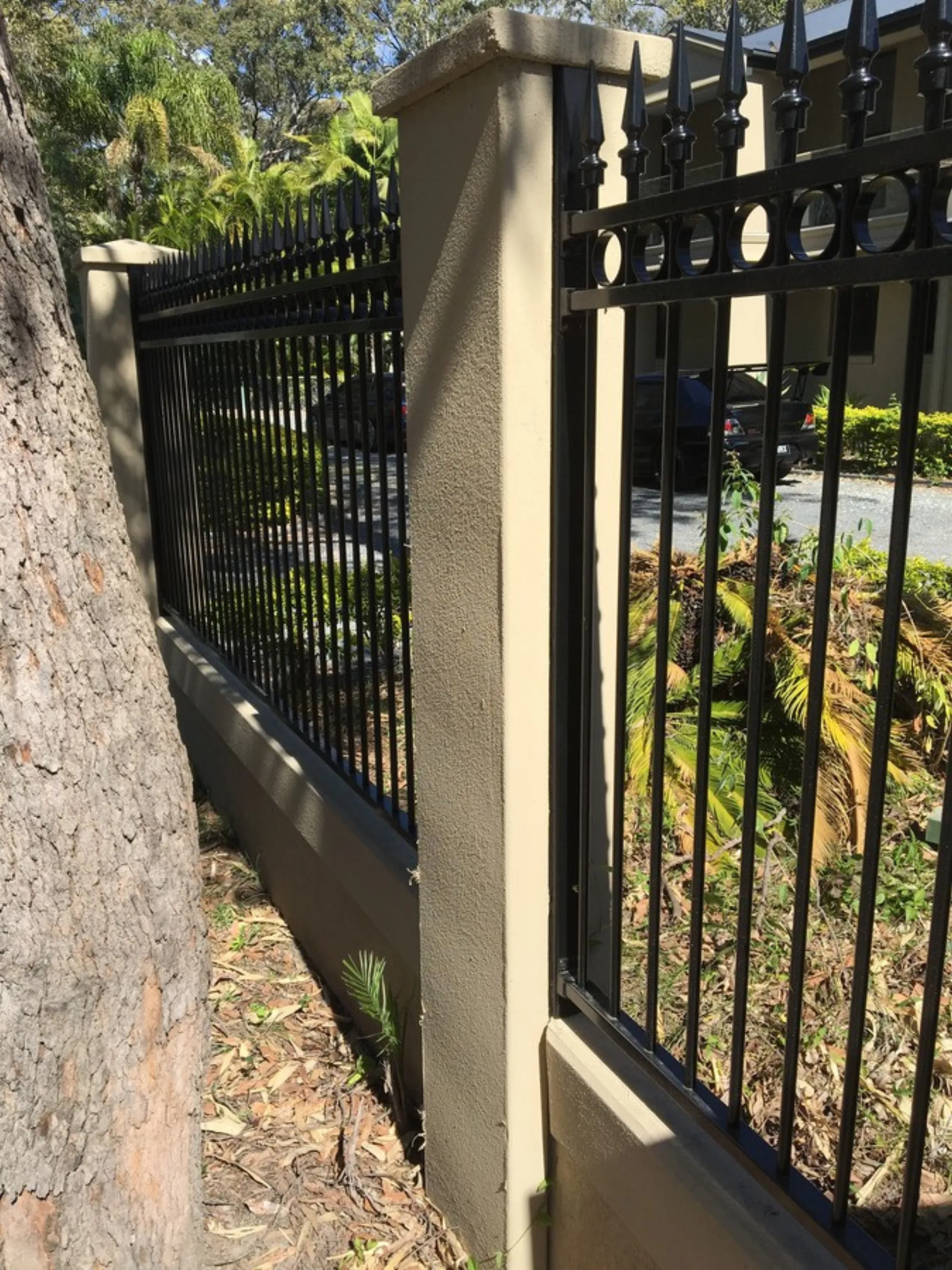
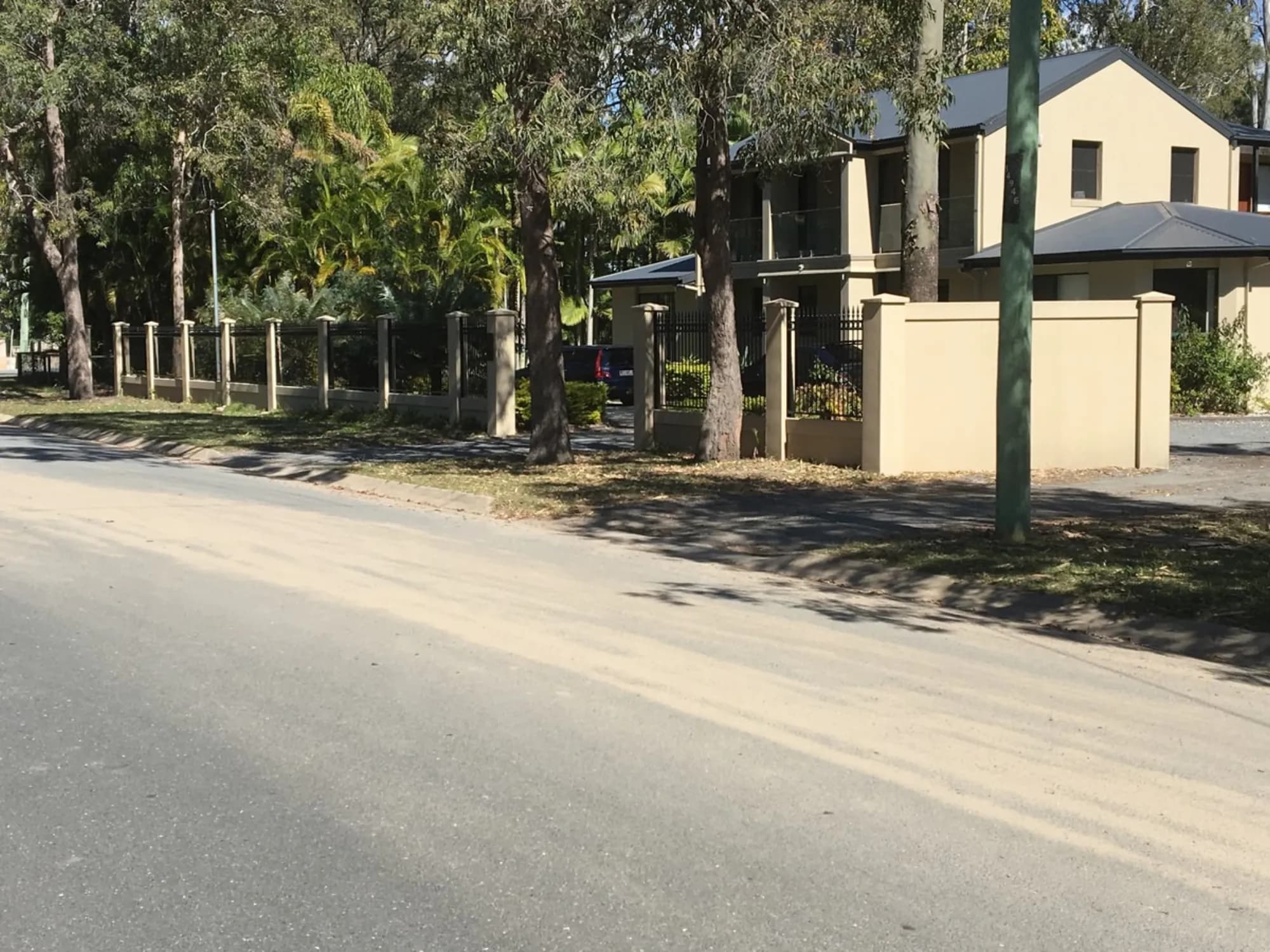
- Superior Infill Collection™: infill panels that pair 2-metre concrete columns with 1-metre concrete base panels, with the middle section in wrought iron, metal slats, balustrades or timber pickets when you want airflow or a view through. Gates on an infill fence are a separate cost, supplied and fitted by your chosen gate or fabrication specialist, so allow for them from the start. The infills are supplied and installed by your chosen gate supplier.
Getting the panels onto your block
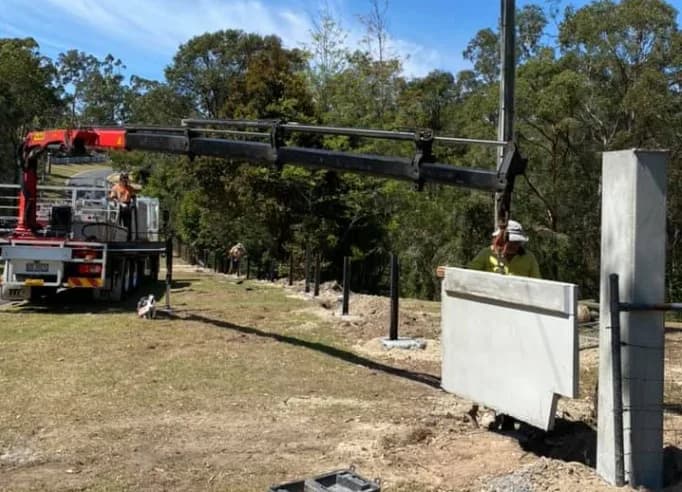
Precast panels arrive already cast and are placed by crane truck. That is what keeps the install moving, and it is also why access matters. Concrete and crane trucks may need to drive over your lawn to reach the fence line where access requires it.
Before you book, walk the route from the street to your fence line. Note narrow side paths, garden beds, overhead lines and anything you would not want a heavy truck near, and tell your installer about them up front.
We can install up to 100 metres in a day, depending on site conditions and access. The more you share about your block at quote stage, the more accurate your timing will be.
Common mistakes when choosing a concrete panel fence
Each of these is easier to sort out before a job is booked than after.
- Leaving the old fence out of the budget. Ask whether removing your existing fence is included. With us it is available as an extra and is not part of the standard quote.
- Assuming approvals are sorted. Fence height and position on your block can change what your council or certifier needs. Check with them before you order, not after.
- Forgetting the neighbour. On a shared boundary, talk to your neighbour before the quotes come in. Showing them the finish on their side early saves a harder conversation later.
- Choosing on the upfront number alone. Weigh how long the fence is expected to last, not just the figure on the quote. Our walls are designed for exceptional durability, with an expected lifespan of 100 years or more.
- Leaving the finish until last. Which way the stone faces, which infill material you want and where the gates go all affect the order. Settle them before you sign.
Questions to ask on any quote
Take this list to every supplier you talk to, including us:
- What strength is the concrete, and is fibre added to the mix?
- What footing system is used, how big are the piers and how far apart are the posts?
- Is the panel finished on both sides, or only on the side facing you?
- Who makes the panels, and who installs them?
- Is the system engineer-designed?
- Is removal of the old fence included, or listed as an extra?
- What access do the trucks and crane need on your block?
- Which of these answers are written on the quote itself?
If a supplier cannot answer the first three clearly, you do not yet know what you are buying.
Getting a measured quote
We do not publish a per-metre rate, because every fence line is different. Instead, we prepare a free, no-obligation measured quote based on your property.
We work across Brisbane North and South, the Gold Coast, the Sunshine Coast, Logan, Ipswich, Redlands, Moreton Bay and the Scenic Rim. To see how a job runs from quote to the last panel, read our fence installation page, or call 1800 092 557 (free call Australia-wide) to talk through your fence line.
Frequently asked questions
How strong is precast concrete fencing?
It depends on the concrete each supplier uses, so ask for the MPa rating in writing. Our panels are cast from Holcim 50MPa concrete (56MPa typical) with ENVIROMESH MP47 fibre added at the batching plant, and sit in precast columns over galvanised steel beams set in 450mm pier footings.
Do I need council approval for a concrete fence?
It depends on your council, the fence height and where it sits on your block. Check with your local council or a building certifier before you order.
How do the panels get into my backyard?
Each panel weighs roughly one tonne and is placed by crane truck, so access matters. Concrete and crane trucks may need to drive over lawns to reach the fence line where access requires it.
Is removing my old fence included in the quote?
Removal of an existing fence is available as an extra and is not included in the standard quote. Mention it when you ask for your measured quote so it can be listed.
Tags